WIJFR: Trojan Horse

It’s two years after the Zero Day attacks, and cyber-security analyst Jeff Aiken is reaping the rewards for crippling Al-Qaida’s assault on the computer infrastructure of the Western world. But the West is under its greatest threat yet. A revolutionary, invisible trojan that alters data without leaving a trace – more sophisticated than any virus seen before – has been identified, roiling international politics. As the trojan penetrates Western intelligence, and the terrifying truth about its creator is revealed, Jeff finds himself in a desperate race to reverse it as the fate of both East and West hangs in the balance.

I just finished reading “Trojan Horse,” the sequel to “Zero Day” by Mark Russinovich.

Russinovich’s second techno-thriller reunites security analyst Jeff Aiken and now-girlfriend/business partner Daryl Haugen as they attempt to track down the latest threat to global security: a trojan horse, of unknown origin, that is subtly altering documents at the United Nations. The trojan is only accidentally discovered when it crashes the word processor of a UN employee authoring a critical document regarding Iran’s nuclear weapons program.

The first part of the book, as Jeff and Daryl pick apart the trojan’s code and attempt to trace it back to its authors, is full of the low-level technical details you’d expect from Russinovich after reading “Zero Day.” The second half is an international chase across Europe, the Middle East, and even China, as the depth of the conspiracy is revealed.

The inclusion of  recent technological threats, real-world events, and a healthy dose of the Stuxnet trojan make “Trojan Horse” a gripping, if not slightly scary, read.
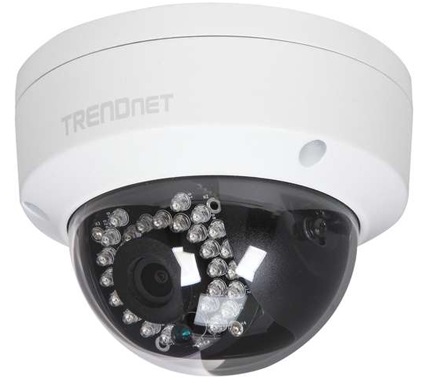
TRENDnet TV-IP311PI outdoor camera and TPE-TG44g PoE switch

TV-IP311PINow that the wireless network re-design was done, I wanted to replace my aging Foscam outdoor cameras with newer, HD models. Installing the Ubiquiti UniFi AP was my first introduction to power-over-ethernet and I decided to move to PoE (instead of wireless) cameras. I already had TRENDnet cameras in my current setup, along with TRENDnet switches, so I decided to stick with that brand and selected the TV-IP311PI outdoor cameras and TPE-TG44g PoE switch.

Read more

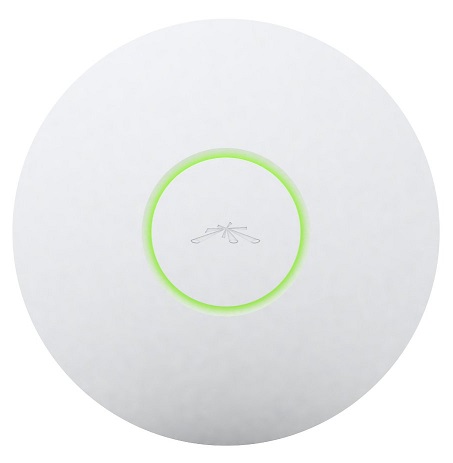
Ubiquiti UniFi AP

Ubiquity UniFi APMy current home wireless setup had been in-place and stable for about two years. And while everything was working fine, my incessant need to tinker was overpowering so I decided to do a little re-design and simplification.

The real reason for the re-org was because I wanted to try out the Ubiquiti UniFi AP, an 802.11n wireless access point with MIMO technology capable of 300Mbps speeds with ranges up to 400 feet. Slightly larger than your average smoke detector, it’s meant for enterprises but for $70 if you know your way around network setup it’s pretty simple to set up as a very robust home access point when paired with your existing router.

Read more

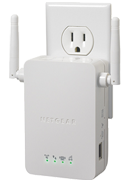
Netgear WN3000RP WiFi range extender

I picked up a refurbished Netgear WN3000RP “universal” WiFi range extender on Amazon figuring that $40 was worth a shot to see if I could fix my wireless signal strength issue around the house.

I’ve tried this before by getting a new wireless router, but the location of my network closet just isn’t conducive to equal coverage since it’s not in the middle of the house. As a result, the signal strength dips sharply on one side of the house which causes occasional issues with devices (like my outdoor cameras) in that area.

The WN3000RP promised an easy way to extend the wireless … just plug it into an outlet between the router and the “dead zone,” make a few web-based configuration changes, and enjoy increased signal strength. As is usual for me, however, it wasn’t that easy … but I did finally get it working.

Read more

Security vulnerability in TRENDnet cameras – update now!

If you have a TRENDnet webcam that is accessible over the internet, a serious security vulnerability has been discovered that allows anyone to access the video stream without having to login/authenticate! I got an e-mail from TRENDnet about this earlier in the week, but not everyone registers their products so not everyone may be aware of the problem. Be sure to download the latest firmware update for your camera and apply it ASAP!

Read more

WIJFR: Zero Day

A plane over the Atlantic suddenly needs to reboot its computer to stay in the air, and the pilots barely avert disaster. A hospital network mixes up patient information, resulting in the death of several people. A law firm, which has lost all of its clients’ data and can’t get its system running again, turns to Jeff Aiken, a former government analyst and computer expert. He discovers that all of the crashes are insidiously connected, and an even greater disaster is coming.

I just finished reading “Zero Day” by Mark Russinovich, a cyber-thriller on par with Daniel Suarez’s “Daemon” or “FreedomTM.” At its core, “Zero Day” addresses a real-world, incredibly difficult to solve dilemma: with so many unprotected/unpatched computers in the world today, could a well-crafted virus potentially wreak havoc on the global economy?

The plot: an insidious computer virus, masked by different rootkits, multiple variants, and seemingly multiple authors, is secretly infecting computer systems all over the world, with a trigger date of 9/11. The virus is only noticed ahead of time because some of the computers it infected had incorrect system clocks which caused it to trigger a month early, completely crashing them. Jeff Aiken, a computer security expert, and his former colleague Daryl Haugen, the Assistant Director Computer Infrastructure Security Unit at the Department of Homeland Security, are on the trail of the virus, trying to track it back to its source before the zero day strikes. Who is behind the virus? How long has it been propagating? How widespread is it? Can it be stopped? Will anyone believe them?

We’re all familiar with the concept of viruses and malware and the importance of running anti-virus software and firewalls and keeping our computer systems patched. The reality is, however, that there are a lot of machines complete unprotected or unpatched, which opens a lot of vulnerabilities for the bad guys to exploit. Russinovich, a Technical Fellow at Microsoft, is well-versed in the topic at hand, and so I found his novel to be a little more realistic than the Suarez books I referenced above.

The book is fast-paced and a good read even for those of us in the computer industry. For more information about “Zero Day,” check out the book’s website.

Remembering 9/11 – 10 years later

I was still a traveling consultant in September of 2001 and my assignment at the time was a PeopleSoft upgrade in the Chicago suburbs. We were in our daily morning meeting when we first heard the news about the World Trade Center and Pentagon attacks. Like everywhere else that morning, the atmosphere was one of shock and disbelief. At first everyone thought it was a freak accident … until the second plane hit the south tower.

I can’t recall if we we were sent home early, or if we finished the rest of the workday. I do remember going over to a colleague’s apartment (I was staying in a hotel) where we had dinner and sat watching the news coverage for hours into the night.

From my office window I could see the downtown Chicago skyline and would usually watch all the planes on approach into the two airports. Few the next few days, while all flight traffic in the US was grounded, the skies were eerily empty. Since I was didn’t even want to try and fly home to Florida that weekend, I drove to my parents’ place in Cleveland just to be with family instead of by myself in Chicago. When I did finally fly for the first time after the attacks (and for weeks afterwards), O’Hare was a crowded mess of long lines and weary passengers and security screeners. It’s hard to remember there was a time when we didn’t have to take off our shoes or walk through full body scanners.

But this 10th anniversary of the worst terrorist attack on American soil is not just about “where were you?” but about the over 3,000 people who lost their lives on 9/11 and the men and women who continue to work to keep America safe at home and abroad.

Never forget.

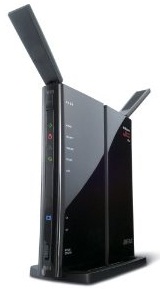
Buffalo WZR-HP-G300N wireless router

Last month I spotted a Fatwallet deal for the Buffalo WZR-HR-G300N gigabit wireless N router ($60 from Amazon with free Prime shipping) that I couldn’t pass up. I didn’t have any wireless N clients and wasn’t having any real problems with my four year-old Buffalo WHR-HP-G54 wireless router (running DD-WRT), but hey, cheap new tech, right?

Back in 2009 I had jumped on a similar deal and snagged a Buffalo WHR-G300N wireless N router for $35. After getting it all set up with DD-WRT, though, I discovered that with the lack of external antennas and no high-power radio the wireless signal wasn’t strong enough to cover my entire house like the WHR-HP-G54 was currently doing. Since I had effectively voided the warranty by flashing DD-WRT onto the router, I kept it for use as a switch in my office (and am still using it today, in fact).

I was hoping that the three antennas (two external, one internal) and high-power radio in the WZR-HR-G300N would do the job of replacing my WHR-HP-G54 plus give me a gigabit switch in the computer closet. I was also excited because Buffalo now included their own branded version of DD-WRT (they call it the “professional” firmware) on the router, so no more voided warranty issues!

Things never go as planned, though.

Read more

ZoneMinder

Last summer, my mini-tech project was installing some wireless internet cameras inside and outside the house so I could keep tabs on things while I was away. For the past year I’d just been using the built-in features of each of the cameras (motion detection, e-mail alerts, etc.) which was hit-or-miss since each manufacturer offered different features, some better implemented than others, and none of them perfect.

This setup was fine, but I wanted to be able to better manage the system and maybe even store more history of events (or “live” video) without having it be all e-mail messages with static image attachments. That’s what prompted me to search for open source camera management software, and I that’s how I found ZoneMinder.

Read more