MacBook Air(port) cleared by TSA

The original MacBook Air confused the TSA when it was introduced two years ago.

Now, CNN is reporting that the TSA has cleared the new MacBook Air so you don’t have to take it out of your bag for screening:

Apple may wish to avoid comparisons of the MacBook Air to similarly compact but underpowered netbooks. However, like netbooks, Apple’s new laptop is “smaller than a standard-size laptop,” meaning it can stay in a bag, said TSA spokesman Nicholas Kimball.

When I still had my Eee PCs I always had to remove them from my bag when going through security and they were a lot smaller than the new Macbook Air. Granted, they were thicker and that probably affected the x-ray photos, but it’ll be interesting to see how this plays out at the airport checkpoints.

Foscam FI8904W outdoor internet camera

I’ve been pleased so far with my in-house internet cameras and decided I’d like to be able to keep tabs on the outside of the house as well. TRENDnet sells weatherproof enclosures for their cameras but they won’t work with the night-vision models because the IR just reflects off of the glass. I started looking at other models of outdoor cameras and chose the Foscam FI8904W.

Read more

Microsoft Security Essentials

Microsoft is getting into the anti-malware market.

Microsoft Security Essentials (MSE) is a replacement for Windows Live OneCare and, I think, Defender. Did I mention it’s free? Paul Thurrott has a good write-up on MSE on his SuperSite for Windows.

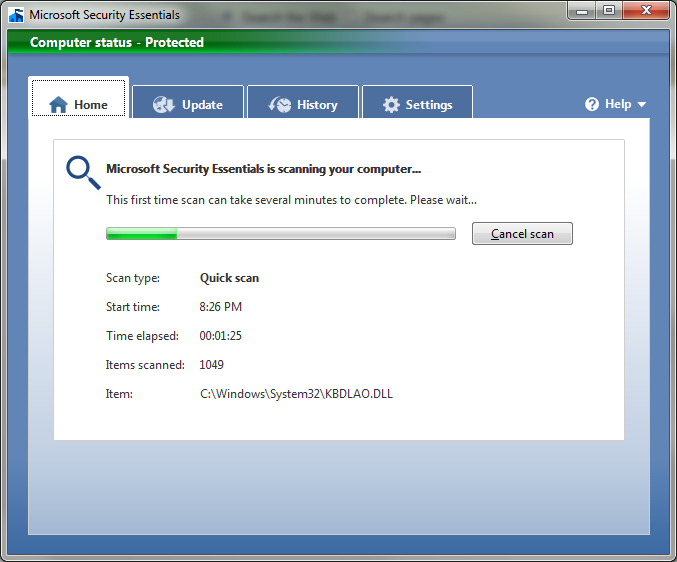
Since I’m already running the Windows 7 release candidate, I figured why not give this a try as well? I downloaded the free beta, uninstalled AVG Free, and installed the new software:

Microsoft Security Essentials

I’ll keep an eye on it for the next few weeks and see  how it goes …

I hate those fake AV trojans!

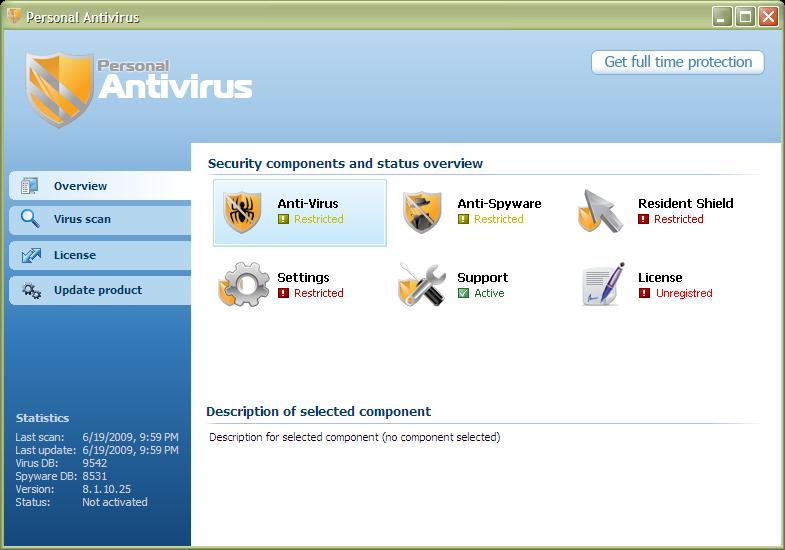
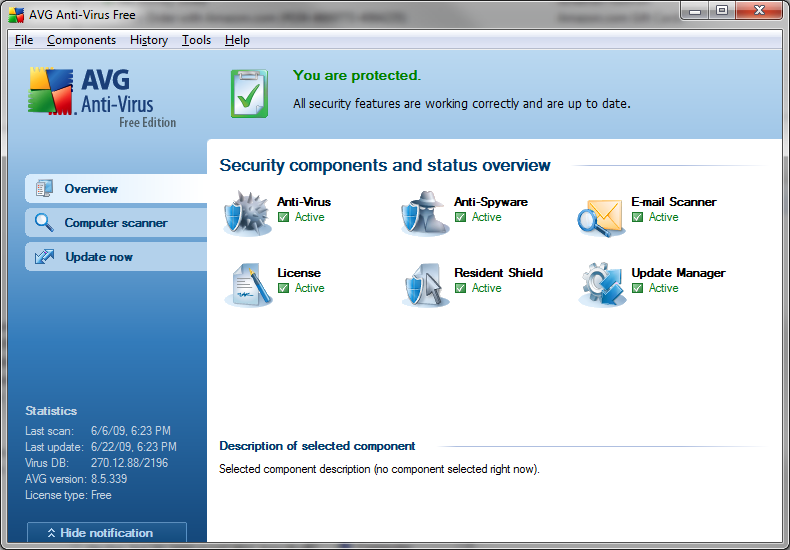
Today I had to clean another one of those fake anti-virus programs off of a machine at work. This one was called Personal Antivirus and bore a striking resemblance to AVG Free (which I use myself and usually recommend to others).

Here’s the AVG console:

AVG Free (real)

And here’s Personal Antivirus:

Personal Antivirus (fake)

Look familiar? In this particular case, neither our corporate Symantec anti-virus nor Malwarebytes (both with current definitions) detected the fake program. I eventually had to clean it off manually myself.

These things are really sneaky. How can we educate the average user to tell these two apart? I mean, other than the fact that they had to click on something in a web browser to get the fake one installed in the first place, once “installed” they look and act like the real thing (well, except for all the fake alerts they throw up). Arrrrgh!

Stop stealing my credit card!

This past Saturday afternoon I received an automated call from my credit card company saying that there were some suspicious charges that they wanted me to verify. The computerized voice dutifully read off the past three transactions and asked to confirm that I recognized all of them.

Unfortunately, there was one I didn’t: a $1 pre-authorization charge from a travel agent in Nebraska. I indicated this by pressing 2 as directed and was told I would be transferred to an agent to discuss the next steps. After being on hold for 8 minutes, the automated voice said no agents were available and I would be called back later, click

Nice.

By Sunday afternoon I hadn’t received another call so I called the customer support number as listed on the web site. After punching in my credit card number into the automated system, I was asked, again, to validate some transactions which turned out to be the same ones as before (including the bad Nebraska travel agent one). I was eventually connected to a live human who informed me that their “systems were down” and they would be unable to pull up any account information until after 6pm and I should just call back then.

So last night I called back a third time and again the automated system asked me to verify some transactions. This time there were two new transactions I didn’t recognize for about $38 each. Up until now I had been hoping the Nebraska travel agent thing was just a fluke, but now I had that sinking feeling that something was indeed up. I spoke to a rep, who had me validate the same information again and then confirmed that it appeared that my credit card had been compromised and they would cancel it immediately. sigh

I’m glad my credit card company is actively monitoring this sort of thing and can stop it before any major fraud occurs (it’s in their best interests, after all). What’s frustrating is this is the third time since October 2007 that my credit card information has been stolen and used in a fraudulent manner. It’s really creepy!

Sure, I use my credit card a lot online … but I’m not new to e-commerce, or protecting my personal and financial information on the internet. I only use my credit card at trusted merchants (over encrypted connections). If I’m going to buy from a site I don’t necessarily know a lot about (or trust) I’ll use a secure one-time card generated by the PayPal plugin (and I use my Verisign PIP token to further secure my PayPal account). I still wish I knew how the theft was occurring so I could take measures to stop it. I’ve got to believe it’s not due to any direct action (or inaction) of my own, but due to things like third-parties with lax security measures over which I have no control.

Anyway, now I have to wait for my new card to arrive and then I can start calling my various service providers to update my card information. At least I have a comprehensive list of who to call/update (compiled from the last two times this happened) so I won’t miss any important items.
Summer alarm sales "scam"

Not technically a scam, but still something that I consider to be shady business practice …

This evening I had a young college-age kid knock on my door wearing an Apex Security polo with an official-looking badge on a lanyard around his neck. He had seen the ADT sign in my front yard and basically starting giving me the lowdown on a new Honeywell security system to replace my current one.

He explained that criminals knew alarm systems used the phone line so would always cut the phone line first before breaking into a home (“maybe you’ve seen that on the news or in movies like ‘The Bourne Identity’, cool movie” he said). This Honeywell system he was pitching used GSM cellular so it was always in contact with home base (“except we have better signal than regular cellular”). He had just installed one for my “neighbors down the street.”

Then he started talking about how Honeywell would be through my neighborhood in the next few months “upgrading” systems for free, he wanted to put a sign for my yard, and I started getting more suspicious. I seemed to recall reading/hearing about door-to-door alarm sales “scams.” Once I started getting that vibe I ended his pitch saying I would do my own research, thanks for stopping by, etc.

After he left I immediately called ADT to speak with a representative and of course they had heard about Apex and their door-to-door sales pitches. The rep told me that yes, they’re a legitimate business, they (ADT) don’t approve of their tactics, but there’s nothing they can really do about it. A few Google searches about Apex, APX, etc. turns up a lot of info on the company. Apparently they’re part of the summer alarm sales “industry” and college students can earn “good money” selling these systems for companies like Apex. They tend to downplay the Apex part and stress known brands like Honeywell or GE.

I can’t fault them (the college kids) for that, but I do disagree with their (Apex’s) hard-sell scare tactics. I can easily see the elderly in my neighborhood falling for this method (I found a local article from last summer where that actually happened). I also found this interesting blog on the subject.

Just a heads up … watch out for these guys.