It’s been just over a year since my last classic computer build (the PiDP-10) so it’s time to assemble Oscar Vermeulen’s latest project, the PiDP-1! I actually ordered the kit last Thanksgiving and it arrived about a week later (from Panama!) but then life got crazy: I ended up switching jobs which meant I was busy onboarding, getting benefits and such in order, and basically learning the ropes. On top of that, I lost the two weeks of winter break provided by my old employer and started with no PTO at the new place, which meant very little no free time over the holidays (just Christmas Day and New Year’s Day). I did manage to do a little prep work for the kit during that time, however, like purchasing another 4gb Raspberry Pi 5 with a 64gb microSD, imaging it with Debian 13 Trixie, and prepping the PiDP-1 software. Finally over the past two weeks I found some time to pull out my trusty soldering iron and get to assembling …
classic computing
Building the PiDP-10
 First post of 2025, time for a new build! The PiDP-10 kit is the latest classic computing offering from Oscar Vermeulen at Obsolescence Guaranteed and the follow-up to his PiDP-8 and PiDP11 kits. I purchased and received the kit back in August last year, but then with the Florida hurricanes, getting super busy at work in the fall, and then the holidays and year-end, I finally just found some free time this past weekend to actually build it!
Building the Altair-Duino
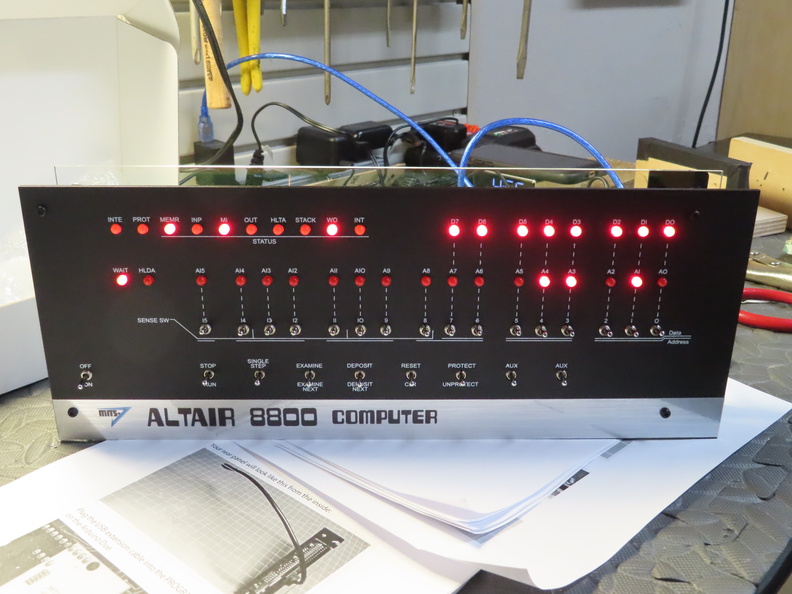 It’s been over two years since my last classic computer kit build and I was getting that itch to add more blinkenlights to my collection. Chris Davis’ Altair-Duino kit has been on my radar since last December when I saw it on episode #797 of Steve Gibson’s Security Now! podcast (which also introduced me Oscar Vermeulen’s excellent PiDP-8 and PiDP-11 kits) and I decided it was finally time to pull the trigger.
I went with the Standard kit over the Pro due to its smaller footprint (more flat instead of the boxier acrylic case) and, though the VT100 emulation calls back to my days as a VAX lab monitor in college, I probably wouldn’t really use it that much. The kit actually arrived the last week of July but I just recently had some time to sit down and build it in an afternoon.
Building the PiDP-11
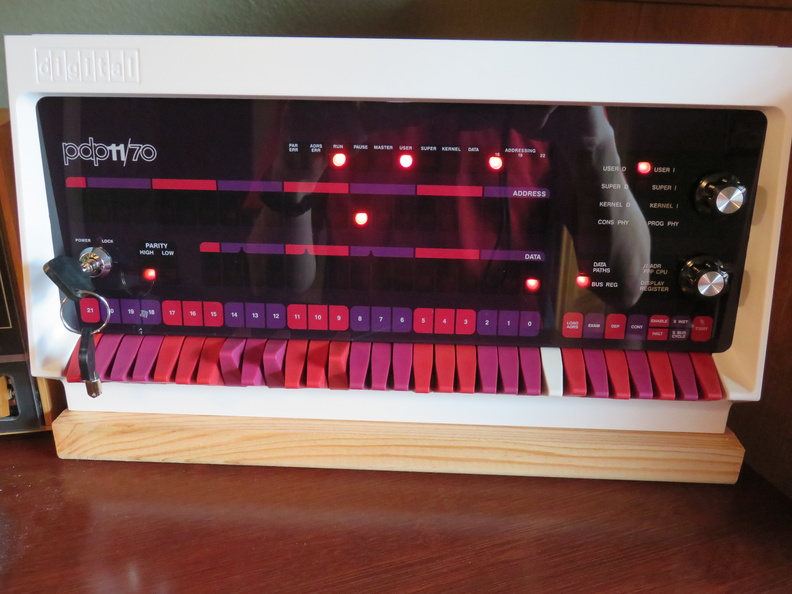 Three and a half years ago I built my PiDP-8 kit and it’s been happily blinking away on my desk ever since (it also runs my Pi-Hole). Earlier this year, on episode #698 of Steve Gibson’s Security Now! podcast, Steve mentioned that Oscar Vermeulen had come out with a new kit, the PiDP-11! I loved the experience of building the PiDP-8 and the quality of the final product so I immediately signed up on the mailing list to be in Oscar’s next batch of orders.
A week later I received (and submitted) my order form. While I was waiting for the kit to arrive, I picked up a Raspberry Pi 3 B+ kit and 32gb SD card. Following the instructions in Step #1, I prepped the SD card with Raspbian (Jessie Lite) and downloaded and installed the PiDP-11 software. Since the RPi 3 B+ is a lot more powerful than the RPi 1 B+ in my PiDP-8, I decided to consolidate and move my Pi-Hole and Retro-Pie installations onto it as well. With the Pi ready to go, I just needed the kit …
Building the PiDP-8
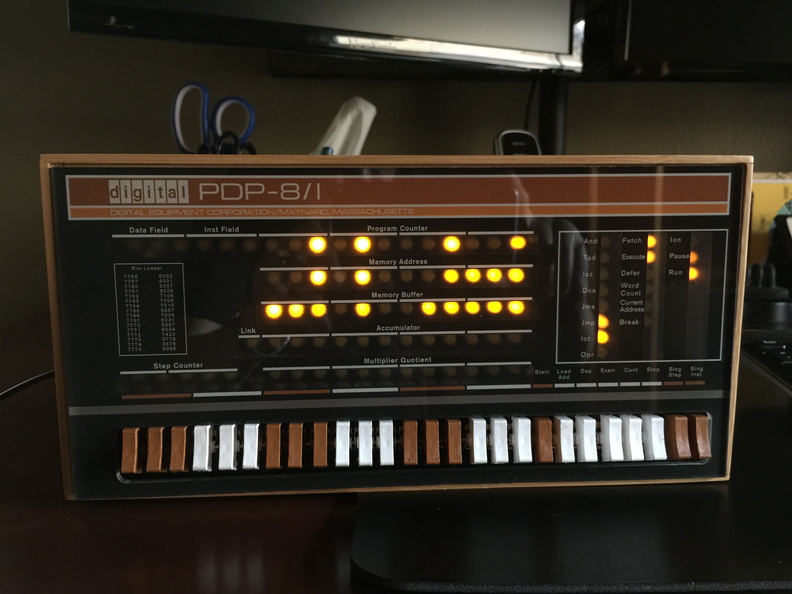 I’m a computer guy, and while I’m not quite old enough to have first-hand experience with classic golden age hardware like the PDP-8, I spent a good deal of time in college working on the VAX, still own my first computer, and have an appreciation for those forefathers of the amazing PCs and servers we use today.
Back in 2009 (episode #177 of the Security Now! podcast), Steve Gibson mentioned Bob Armstrong’s PDP-8/E-like front panel for his SBC1620 single-board computer. Watch any episode of Security Now! since then and you can see three of those units with their blinking lights over Steve’s left shoulder. The kit was expensive, though, and I couldn’t justify the cost or effort necessary to procure the necessary parts for a system I could really only use for eye candy.
Fast forward 8 years or so to this past April, where in episode #505 of Security Now!, Steve mentioned Oscar Vermeulen’s PDP-8/I kit, based on the Raspberry Pi, available for under $200. After just a few minutes of browsing the pages on Obsolescence Guaranteed, I immediately joined the mailing list …
WIJFR: Masters of Doom
Doom, the video game in which you navigate a dungeon in the first person and messily lay waste to everything that crosses your path, represented a milestone in many areas. It was a technical landmark, in that its graphics engine delivered brilliant performance on ordinary PC hardware. It was a social phenomenon, with individuals and companies hooking up networks specifically for Doom tournaments and staying up for days to blast away on them (well before the Internet went big-time).
I just finished reading “Masters of Doom: How Two Guys Created an Empire and Transformed Pop Culture” by David Kushner and am itching to hook up some old PCs and do some deathmatching. Who’s with me?
Creating interactive fiction with Inform 7
If you owned a personal computer in the 80s and played computer games, you probably played at least one Infocom text-based adventure game like Zork or (my personal favorite) The Hitchhiker’s Guide to the Galaxy. Known as interactive fiction, or IF, these games used the most powerful computers on the planet for their processing engines … your imagination. Instead of fancy color graphics and digital sound effects, Infocom games were just white text on a black screen controlled by you typing in commands like “go north” or “examine the small box” and usually involved solving complicated puzzles to win.
I’m actually a little surprised I haven’t written about IF before on this blog considering how fond I was of playing Wishbringer or Moonmist on my Atari 800XL back in the day. Even my daughter had even gotten into playing IF games on my iPad with Frotz. She’s an avid reader and also loves playing games, so IF games are a natural fit for her. Back in late August I decided I wanted to try my hand at writing her a personalized game which eventually evolved into the idea of making the game a scavenger hunt of sorts for her birthday in December. That gave me about four months to plan, design, write, and test the game.
Happy birthday, Big Blue!
 Today IBM is celebrating its 100th birthday. From bar codes, to the floppy disk, to the IBM PC, to Watson, there’s no shortage of contributions IBM has made to the world over the past century.
I was an IBMer for just over a year, part of the Global Services division when they purchased PwC Consulting (my employer at the time) back in 2002. I remember it being a big adjustment, going from a large, private (formerly a partnership) firm of 30,000 employees to a giant public company of over 300,000 people. At the same time, as a tech guy, going to work for one of the largest technology companies in the world was an exciting opportunity (and the employee purchase program was nice, too). In hindsight, it was better than working for Monday or being bought by hp … it couldn’t hurt having IBM on my resume’, right?
I left IBM in 2003, not because I didn’t like working there but more because I was ready to get out of consulting. I still look back with pride on being a part (albeit very small) of that company for 13 months. So, happy 100 Big Blue! You don’t look a day over 50. 😉
Pac Man turns 30
Wow, Pac Man is 30 years old. To celebrate, Google put up a logo Doodle that was an actual playable Pac Man game, sound effects and all! What a blast from the past … I sank quite a few quarters (or tokens) into Pac Man machines back in the day. I also had the Pac Man Fever album. 😮
You hear maniacal laughter in the distance …
I found, via slashdot, this great article on the history of Rogue, a character-based dungeons-and-dragons computer game from the early 80s, originally developed for UNIX.
While I had been playing paper-based RPGs with my friends and computer-based D&D games (like the Alternate Reality or Ultima series on my Atari 800XL) all through high school, I didn’t encounter Rogue until college. This makes sense since that would have been the first time I encountered a UNIX system (actually, though, I was playing it on the university’s VAX).
Despite the fact that its graphics were limited (your character was @ and monsters were letters like ‘Z’ for zombie or ‘V’ for vampire) and the controls were a little hard to get used to (H and L for left/right, J and K for up/down), it was a fun game to play because it was different every time: you never knew what monsters you were going to encounter (watch out for those monster party rooms!) or what cool weapons, potions, or scrolls you would find.
My daughter loves playing iRogue on my Treo (although should I be disturbed that she likes playing as undead? 😀 ). There’s even an iPhone version. Portable retro gaming at its best.