An evening with TSO

For my birthday last month, my younger siblings got me tickets to the Trans-Siberian Orchestra concert here in Tampa tonight.

If you listen to any Christmas radio, you’ve probably heard TSO standards like “Christmas Eve/Sarajevo” or “Wizards in Winter.” In fact, until tonight those were the only two songs by the group I had on my iPod. If you haven’t heard, or heard of, the Trans-Siberian Orchestra, think Christmas music in the rock-opera style and you should have a good idea of what TSO is all about.

Not only was the music and singing fantastic, the light show and pyrotechnics were amazing. It was also cool to see the wide range of people at the show: couples, families, and folks of all ages. In fact, the two guys sitting next to me, drinking some beers and “woo!”ing during all the good parts looked like they belonged at the hockey game instead of a concert, but were having a great time like everyone else. You never would have pegged them as TSO fans if you ran into them on the street.

Overall, it was a cool experience and a nice way to start the upcoming holiday season. Time to hit up the Amazon MP3 store for some more tracks for the Christmas playlist!

Galleon 2.5.4 is out

John has released Galleon 2.5.4. Here’s what’s new, from the release notes:

  • Fix ToGo looping bug on null recording date (1811137)
  • Added user-selectable range for local radar image (100, 300, 600 miles) in Weather app
  • auto-subdirectory publishing for GoBack, avoids the need to do it yourself and also avoids bugs in TiVo folder navigation in older TiVo service releases (Series 3 and HD should be OK without this). (Probably needs some work to handle DOS shortcuts; should be OK on UNIX and OS X.)
  • XML parsing of recording meta-data for non-Galleon-created video files in GoBack areas. e.g. if you post-process .TiVo files into .mpg, just put the XML output containing the show details, in the same format as it comes from the TiVo, into a .xml file with the same prefix. If you use tivodecode to unwrap .TiVo files, the metadata are in the -02-0002.xml file generated with the -D (dump-metadata) option.
  • Enabled store-by-show handling in GoBack server (available on GoBack preferences pane).
  • Fix for linux Makefile (1815568) and init script for distro independence

The items in bold are things I’ve personally contributed to this release, like the user-selectable radar range.

What do you think, sirs?

I found this New York Times article via slashdot … “Mystery Science Theater 3000” turns 20 this month!

MST3k premiered on Thanksgiving Day 1988 on KTMA in Minnesota. It was eventually picked up by Comedy Central where I discovered it as a sophomore in college in 1992 (back when Jon Stewart was still on “Short Attention Span Theater“). I remember having a group of friends come down to visit one weekend for KingCon that summer and telling them “guys, you have to see this show.” We were hooked (and their wives probably still hate me for introducing them to it).

MST3k was a Saturday night staple during my college years:

  • I recall setting up the VCR to record the Turkey Day marathons and asking my roommate who was staying at school over break to change the tapes every 6 hours (man, TiVo would have made that soooo much easier!).
  • I remember watching Joel’s last episode, and Mike’s first one.
  • I would occasionally post in alt.tv.mst3k (that’s on Usenet for you younger folks ;-)).
  • I remember worrying when Comedy Central dropped the show (but then SciFi picked it up).
  • I wrote an alternate version of the lyrics to the opening theme (who hadn’t, back then?).

And it’s still a (small) part of my life today:

The original Brains now run “Cinematic Titanic.” I’ve purchased, downloaded, and watched the first two episodes and they are really great … reminds me of old times with friends on Saturday nights.

Keep circulating those tapes …

Alas, poor Firewire, we hardly knew ye

It seems like just yesterday (ok, last decade!) when I got my first digital video camera and then purchased a Firewire card for my PC so I could download and edit my home movies. Since then I’ve owned a multitude of laptops and PCs with IEE 1394 built in. It was aimed primarily for high-speed data transfer situations, like digital video and hard drives … and it was king for a little bit, until USB 2.0 came out.

It’s sad, though not surprising, that Firewire’s creator, Apple, seems to have given up on the technology, admitting that USB 2.0 won the “war” for the low-end, high-speed connectivity standard. The latest round of MacBooks don’t have Firewire ports (although the higher-end MacBook Pro still includes an FW800 jack). When announced, this lack of Firewire caused quite a tizzy in the Mac community. Steve Jobs’ response: deal with it: he simply pointed out that most HD camcorders shipping today include a USB 2.0 port.

When I was shopping for a new PC last month, I was originally looking for a machine with Firewire since my current PC had it, used in conjunction with my Panasonic PV-GS250. Then the MacBook announcement and the subsequent flurry of coverage about Firewire missing happened. That prompted me to double-check my camcorder and sure enough, it had USB 2.0 connectivity (and I bought it 3 years ago this month). So I dropped the Firewire requirement from my new PC and now I’m Firewire free (not to mention PS/2, serial, and parallel port free too). Ah, legacy connections …

Rookie of the Year

Congratulations to Evan Longoria, the unanimous AL Rookie of the Year! Longoria is the first unanimous winner since Nomar Garciaparra in 1997 and the first-ever Rookie of the Year for the Tampa Bay Rays, capping off a tremendous season of firsts.

Only five more months until Spring Training!

Graduation at East High

I took my daughter to see “High School Musical 3: Senior Year” this afternoon. I guess everyone who wanted to see this saw it opening weekend, because this was only the third weekend of its release and the theater was pretty empty … and all the kids were girls under 10, as I expected.

“Senior Year” follows the now-familiar (to anyone with a young daughter) characters of Troy, Gabriella, Sharpay, Ryan, Chad, Taylor, and Kelsi as they finish their last year at East High and face graduation and moving on to college.

Like the first two films, this one has some snappy song-and-dance routines but is a little light on story/plot (but I guess HSM is about the music after all, right?). My daughter’s favorite song was “The Boys are Back,” sung by Troy and Chad in a junk yard scene where they reminisce about being kids pretending to be ninjas, superheroes, etc. My daughter particularly liked the part where they turned into 8-year old versions of themselves. I didn’t really see anything “big budget” about this movie compared to the originals which aired directly on the Disney Channel. I guess doing a full theater release was just one more way for Disney to rake in the cash before the end of the franchise (like they won’t make a ton on merchandising and tie-ins anyway!).

It’s an amazing world our kids are growing up in: when we got home after the movie, I purchased the HSM3 soundtrack from the Amazon MP3 store (for $4 less than the DRMed version on iTunes) and then burned it onto CD so she had it for her bedtime listening enjoyment. Incredible.

If you’re a parent who’s seen HSM3 (or any of the HSM movies for that matter), you owe it to yourself to check out the “Night School Musical: Senior Year Equivalent” sketch from Saturday Night Live.

WIJFR: Ringworld

Four travelers come to the Ringworld: Louis Wu – human and old; bored with having lived too fully for far too many years. Seeking a challenge, and all too capable of handling it. Nessus – a trembling coward, a puppeteer with a built-in survival pattern of nonviolence. Except that this particular puppeteer is insane. Teela Brown – human; a wide-eyed youngster with no allegiances, no experiences, no abilities. And all the luck in the world. Speaker-to-Animals – kzin; large, orange-furred, and carnivorous. And one of the most savage life-forms found in the galaxy. Why did these disparate individuals come together? How could they possibly function together? And where, in the name of anything sane, were they headed?

My latest read was the Hugo and Nebula award-winning novel by Larry Niven, “Ringworld.”

Two humans and two aliens are brought together to investigate an amazing artifact: the Ringworld is a ring (duh!) built around a sun. At six hundred million miles long and a million miles wide, it has roughly 3 million times the area of Earth. It’s spinning around the sun at 770 miles per second, so it has gravity. The air is held in by thousand foot high walls on either side. A series of shadow squares also orbiting the sun give it night and day (but when the sun is out, it’s always high noon). Niven does a great job of visualizing the Ringworld and what it would be like to stand on the surface (I loved the Arch of heaven).

As usual in these posts, I’ll refrain from major plot summaries or spoilers and just make some general comments. It took me a while (just like Louis Wu) to wrap my mind around the scale of Ringworld. It’s HUGE. But Niven makes it seem plausible. The characters were fun (Speaker-to-Animals reminded me of the Kilrathi Hobbes from the old Wing Commander games) and the plot really moves … it was a hard book to put down. Unfortunately, it seemed to wrap up too quickly, almost as if Niven was in a rush to finish and just stopped. The ending left me wanting, so I guess I’ll have to read “The Ringworld Engineers” next (although I’ll probably stop after that because I’ve heard the last two books in the series are not that great).

One thing to consider: is it possible to be so lucky that you’re unlucky to the others around you? Think about that. If you read the book, you’ll understand what I’m talking about.

Experimenting with virtual machines

I’ve been playing around with Microsoft’s free Virtual PC 2007 product at work lately in an attempt to keep an old Visual FoxPro 3.0 application running on newer hardware. This particular application refuses to run on any machine with more than 256mb of physical RAM. That’s right, 256 megabytes. Needless to say this is not really feasible in today’s computing environment, but legacy apps need to be supported. Placing the app into a virtual machine seemed to be a good solution: the VM runs on the user’s current modern hardware, but can simulate the 256mb of RAM required by FoxPro.

Setting up a Virtual PC is incredibly easy. The wizard walks you through the initial setup (location of the virtual hard drive file, memory allocation, etc.) and then it “boots” and you install the OS like you would on a fresh PC. For my FoxPro app, I installed Windows XP SP3 from our slipstreamed CD. All of the hardware (CPU, network adapters, USB devices, etc.) from the local machine running Virtual PC are available to the VM. Once the install was done, I configured the VM like any other PC on the corporate network: joined it to the domain, installed the basic corporate utilities, and then finally copied over FoxPro. It works great and is a lot faster than running it on the old Pentium II 350MHz machine the user was running the app on before.

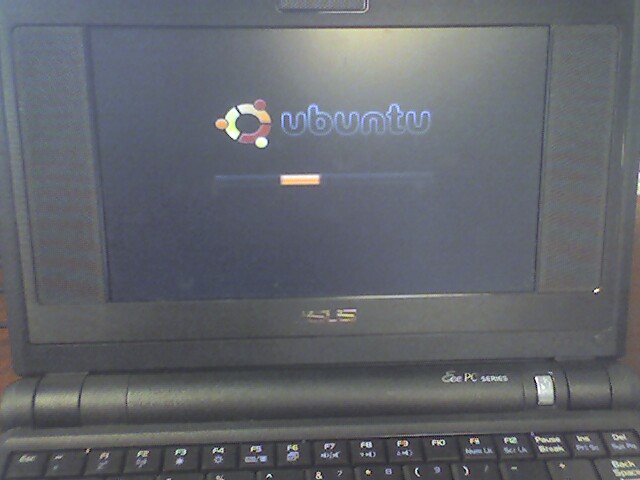
For fun, I even created a VM running the latest Ubuntu 8.10 release:


This has got me thinking … what other cool things could I do with virtualization? Hmmm …

Impeccable Intrepid Ibex Installation

Tonight I did another in-place upgrade on my server, this time from Ubuntu 8.04 (Hardy Heron) to 8.10 (Intrepid Ibex). Like last time, I did the upgrade through PuTTY over an SSH connection and it was flawless. I just had to clean up a few configuration files and put back my installation of Gallery 2.3 (since Intrepid comes with a slightly older release). I love it when upgrades go smoothly.

Pointless side note: I upgraded to Hardy on 6/11 and upgraded to Intrepid on 11/6. 🙂

Second pointless side note: an ibex is a species of wild mountain goat.