WIJFR: Homeland

While attending the Burning Man festival, Marcus receives a USB drive from a hacker, Masha, with more than 800,000 incriminating government documents, and she advises Marcus to publish the material if anything happens to her. Meanwhile, a contact at the festival recommends Marcus to California Senate Independent candidate Joe Noss as a webmaster, and he has his first real job, but can he fulfill his promise to Masha and keep his new position? Doctorow sends readers into a world of Darknet secret websites, Occupy protests, kidnapping and interrogation, and hacking.

Clearing out my queue of “young adult” novels, I just finished “Homeland,” Cory Doctorow’s sequel to “Little Brother.”

“Homeland” starts out at Burning Man, which was timely since the festival just ended a few weeks ago while I was reading (you can check out some cool videos here and here). 19-year old Marcus Yallow, the protagonist from “Little Brother” runs into his old nemesis Masha who gives him a thumb drive with over 800,000 incriminating government documents with instructions to publish them everyone if she should disappear. The next day, at the end of the festival, Marcus sees Carrie Johnstone, the former DHS agent who waterboarded him in the previous book, snatching Masha right before an explosion rocks the playa.

Back in San Francisco, Marcus and his girlfriend Ange struggle with how to review and anonymously release the trove of sensitive and controversial documents without being snatched themselves. Marcus finds himself walking a fine line when he gets a job as the technology ninja for the independent Joe Noss Senate campaign, trying to use the documents to further Joe’s campaign against the established parties without implicating himself (or Joe) in their release. Government interests, politics, large corporations, kidnapping goons, occupy-like protests, rootkits, paranoid virtual machines, and cool hackerspace technology all play a role as the story unfolds.

I read “Little Brother” over four years ago, so trying to recall some of the plot lines, characters, and their relationships was difficult. That being said, you don’t have to have read “Little Brother” to enjoy “Homeland.” Having read it right after “Pirate Cinema” I was stuck by the similarities: a male, teenaged first-person narrative involved in somewhat underground and political movements trying to change society for the better with a healthy dose of current events and technology. It’s another timely read, given the recent controversy around the NSA’s PRISM program and other world events.

Automatic Link

Automatic LinkFor a while I’ve been wanting to get some sort of OBD-II adapter and software (like Carbonga) so I could troubleshoot the occasional check-engine light on my ’03 Toyota Highlander. After reading about the Automatic Link back in March, the allure of a shiny new gadget for $70 (with no additional service fees) was too strong to resist so I pre-ordered it.

Four months later in early July, Automatic started shipping the Link as part of a limited private beta and I was lucky enough to be a part of the testing effort. Earlier this week, the final 1.0 release of the app and device started shipping, available to everyone.

Read more

WIJFR: Pirate Cinema

Trent McCauley is sixteen, brilliant, and obsessed with one thing: making movies on his computer by reassembling footage from popular films he downloads from the net. In the dystopian near-future Britain where Trent is growing up, this is more illegal than ever; the punishment for being caught three times is that your entire household’s access to the internet is cut off for a year, with no appeal.

Ok, yeah, it’s another “young adult” novel like “Little Brother” but who cares? I just finished Cory Doctorow’s “Pirate Cinema,” which recently won a Promethus Award (along with Neal Stephenson’s “Cryptonomicon,” another personal favorite).

“Little Brother” tells the story of Trent McCauley, a British teenager whose obsession with making mash-ups using commercial movies gets his family cut off from the internet for a year. This turns out to be a bigger punishment than Trent anticipated, however, as his sister needs the internet for her school studies and his parents need it for work. The strain Trent has caused on his family is too much for him to bear so he runs away to live in London on his own.

What follows is a tale of being homeless, squatting in abandoned buildings, making new friends, showing movies in the sewers and cemeteries, politics, government, lawsuits, intellectual property, art, and copyright law. It’s a lot of heavy (and topical) subjects, but Doctorow does a good job of making the content accessible (and exciting) to younger (and, ahem, older) readers, all in a sort of Londoner writ and tone I haven’t seen him use in previous novels (the book definitely has its own “voice”).

If you’ve followed the news around SOPA and PIPA recently, or enjoy watching mash-ups on YouTube, you” probably enjoy “Pirate Cinema.”

WIJFR: Kill Decision

Linda McKinney is a myrmecologist, a scientist who studies the social structure of ants. Her academic career has left her entirely unprepared for the day her sophisticated research is conscripted by unknown forces to help run an unmanned – and thanks to her research, automated – drone army. Odin is the secretive Special Ops soldier with a unique insight into the faceless enemy who has begun to attack the American homeland with drones programmed to seek, identify, and execute targets without human intervention.

Together, McKinney and Odin must slow this advance long enough for the world to recognize its destructive power, because for thousands of years the “kill decision” during battle has remained in the hands of humans – and off-loading that responsibility to machines will bring unintended, possibly irreversible, consequences. But as forces even McKinney and Odin don’t understand begin to gather, and death rains down from above, it may already be too late to save humankind from destruction at the hands of our own technology.

Today I finished reading “Kill Decision” by Daniel Suarez, the author of “Daemon” and “FreedomTM.”

A series of terrorist bombings has put the United States on high alert. A secret Special Ops group knows, however, that the bombings are actually drone strikes, aimed at very specific human targets, and are desperately trying to find (and stop) the source of the drones. Professor Linda McKinney, an ant specialist who has developed a software model of how ant colonies swarm and attack, is suddenly swept up into the world of Special Ops as Odin and his crew rescue her from a drone strike and inform her that her software model is being used to control the behavior of autonomous killing machines.

What follows is a fast-paced, technological thriller on par with Suarez’s previous books. At one point, the swarm of thousands of drones intent on killing the team reminded me of scenes from “Matrix Revolutions” (think about the machines invading Zion, or the machine city near the end). As usual, Suarez is able to take real-world existing technology and push it just into the realm of science fiction (or is it?), but not enough to make it completely unbelievable, just scary.

In what seems to be a recent pattern, my reading has coincided with real world events, including a recent unmanned drone landing on a Navy aircraft carrier and a Colorado town passing a law to allow drone hunting!

WIJFR: The Mongoliad: Book Three

The shadow of Holy Roman Emperor Frederick II hangs over the shattered Holy Roman Church as the cardinals remain deadlocked, unable to choose a new pope. Only the Binders and a mad priest have a hope of uniting the Church against the invading Mongol host. An untested band of young warriors stands against the dissolute Khan, fighting for glory and freedom in the Khan’s sadistic circus of swords, and the brave band of Shield-Brethren who set out to stop the Mongol threat single-handedly race against their nemesis before he can raise the entire empire against them. Veteran knight Feronantus, haunted by his life in exile, leads the dwindling company of Shield-Brethren to their final battle, molding them into a team that will outlast him. No good hero lives forever. Or fights alone.

I’ve finally finished “The Mongoliad: Book Three“, the collaborative effort by Neal Stephenson, Erik Bear, Greg Bear, Joseph Brassey, Nicole Galland, Mark Teppo, and Cooper Moo, and (what I thought was) the last book of the Foreworld Saga. At the end of my last post I was hoping that the myriad of storylines of “The Mongoliad” would start to come together. In some ways I was rewarded, but in others left wanting.

Read more

WIJFR: The Mongoliad: Book Two

The Shield Brethren, an order of warrior monks, search for a way to overthrow the horde, even as the invaders take its members hostage. Forced to fight in the Mongols’ Circus of Swords, Haakon must prove his mettle or lose his life in the ring. His bravery may impress the enemy, but freedom remains a distant dream. Father Rodrigo receives a prophecy from God and believes it’s his mission to deliver the message to Rome. Though a peaceful man, he resigns himself to take up arms in the name of his Lord. Joining his fight to save Christendom are the hunter Ferenc, orphan Ocyrhoe, healer Raphael, and alchemist Yasper, each searching for his place in history.

Today I finished “The Mongoliad: Book Two“, a collaborative effort by Neal Stephenson, Erik Bear, Greg Bear, Joseph Brassey, Nicole Galland, Mark Teppo, and Cooper Moo. This second part of the Foreworld Saga picks up immediately from Book One (which makes sense since it was originally one long online serial story that was later split into three parts for publication).

Read more

Using my iPhone with Toyota’s Display Audio system

A few weeks ago I traded in my trusty old 2003 Toyota Highlander (174,000 miles) for a new 2013 SE model. In addition to all the automotive and mechanical advances in a 10-years’ newer SUV, I finally have built-in Bluetooth and iPod integration! (I know, welcome to 2008, right? 😉 ). Toyota’s Display Audio system has a lot of cool features, but as with any “new” technology, it’s not without its share of end-user frustration.

Read more

WIJFR: The Mongoliad: Book One

It is the spring of 1241. The Mongol takeover of Europe is almost complete. The hordes commanded by the sons of Genghis Khan have swept out of their immense grassy plains and ravaged Russia, Poland, and Hungary … and now seem poised to sweep west to Paris and south to Rome. King and Pope and peasant alike face a bleak future – until a small band of warriors, inheritors of a millennium-old secret tradition, conceive of a desperate plan to kill the Khan of Khans. Their leader, an elder of the order of warrior monks, will lead his elite group on a perilous journey into the East. They will be guided by an elusive and sharp-witted young woman, who believes the master’s plan is insane. But this small band is the West’s last, best hope to turn back the floodtide of the Mongol Empire.

I received “The Mongoliad: Book One” (by Neal Stephenson, Erik Bear, Greg Bear, Joseph Brassey, E.D. deBirmingham, Mark Teppo, and Cooper Moo … whew!) as a Christmas gift and finally got around to reading it.

“The Mongoliad” apparently started as a social media experiment, a serialized subscription service by Stephenson and his fellow co-authors. Each chapter was published online with related materials (graphics, etc.) and encouraged community discussions. When the story was complete, the “definitive” text was then published in three volumes in the traditional way.

Read more

Microsoft Surface: RT vs Pro

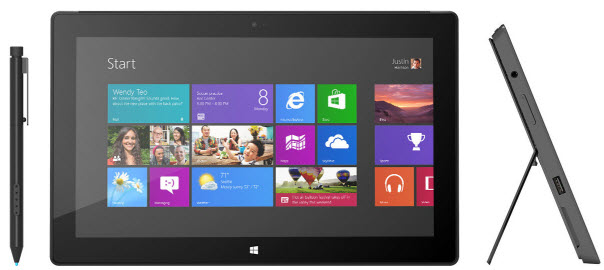
Surface ProFour months ago I bought my daughter a Microsoft Surface RT tablet for her birthday as a laptop replacement. Last month I got a Surface Pro to use at work (also as a laptop replacement). Having now used both versions of Microsoft’s first tablet I wanted to jot down a few of my own observations about the Pro and how it compares to the RT version.

Read more

WIJFR: Life of Pi

After the sinking of a cargo ship, a solitary lifeboat remains bobbing on the wild blue Pacific. The only survivors from the wreck are a sixteen-year-old boy named Pi, a hyena, a wounded zebra, an orangutan—and a 450-pound royal bengal tiger.

We started “reading” the audiobook version of “Life of Pi” by Yann Martel back around Christmas time and on the way to Miami this weekend, finally finished it. Too bad Ang Lee’s movie is out of theaters now, guess we’ll have to rent it.

If you’ve seen any of the trailers for the movie, you probably know that the main plot of the story revolves around a young Indian boy named Pi, shipwrecked and trying to survive on the Pacific Ocean in a lifeboat with a tiger. That’s pretty much all I knew going in so the rest of the book really surprised me, in a good way.

Read more